An affordable, well-connected East Bay city blending scenic nature with urban convenience
Located approximately 25 miles southeast of San Francisco and 15 miles south of Oakland, Hayward is one of the East Bay's largest and most diverse cities — consistently ranked among the top 10 most diverse places in all of California. Positioned at the eastern terminus of the San Mateo–Hayward Bridge across San Francisco Bay, the city offers remarkable regional connectivity alongside a full spectrum of housing options, from entry-level condominiums near BART to hillside single-family homes with panoramic Bay views. For buyers who want genuine Bay Area accessibility at price points that Fremont, Union City, and the Tri-Valley have largely left behind, Hayward represents one of the most strategically positioned residential markets in the entire region.
The Hayward area was occupied by the Ohlone and Yrgin Indians for some 3,000 years before the founding of Mission San José in 1797. In 1843, Mexican soldier and surveyor Guillermo Castro received a 27,000-acre land grant he named Rancho San Lorenzo, encompassing what is today Hayward and Castro Valley. William Hayward — a disappointed gold seeker who arrived in 1851 — purchased several acres from Castro and set up a small general store at the corner of A Street and Mission Boulevard in 1852, establishing the location that became a major stop on the road from Oakland to San José and giving the city its name.
The biggest boom came following World War II, when housing developments began replacing farms and ranches. Between 1950 and 1960, the population jumped from 14,000 to 72,000, driven by affordable new housing and plentiful jobs throughout the Bay Area. California State University, Hayward — now California State University, East Bay — opened in the Hayward Hills in 1957, and BART began operating in 1972 with stations in both downtown Hayward and South Hayward. That combination of university presence, transit infrastructure, and Bay Area geographic centrality has shaped the city's identity ever since.
Hayward is situated in Alameda County along the eastern shore of San Francisco Bay, between Oakland and Fremont on the bay plain and in the Hayward Hills to the east. The San Mateo-Hayward Bridge connects the city directly to Foster City and the Peninsula, making it uniquely accessible to Silicon Valley employment corridors without requiring a freeway crossing of the Bay Bridge. Interstate 880 runs north-south through the city, with I-92 providing the Bay Bridge connection westward and State Route 92 extending to the San Mateo Bridge eastward. Two BART stations — the Hayward Station in the downtown core and the South Hayward Station near the South Hayward BART neighborhood — connect residents to San Francisco, Oakland, and the broader Bay Area transit network, making Hayward one of the few East Bay cities with this level of multi-directional transit infrastructure.
Hayward is home to one of the most genuinely diverse communities in California, drawing residents who value Bay Area accessibility, affordability relative to neighboring cities, and a multicultural community fabric that is reflected in its restaurants, schools, festivals, and civic organizations.
Safe neighborhoods, affordable entry-level and move-up housing options, and the presence of California State University, East Bay alongside Chabot College and strong Hayward Unified School District campuses make Hayward a natural choice for families seeking quality of life and long-term stability at Bay Area price points below Fremont, Dublin, or Pleasanton.
Cal State East Bay's campus in the Hayward Hills draws a consistent population of students, faculty, and staff who value the university's academic programming, the city's affordability relative to the broader East Bay, and the convenient BART access to San Francisco and Oakland that supplements campus life.
Hayward's dual BART access, San Mateo Bridge connectivity to the Peninsula, and I-880 access to Silicon Valley make it one of the most commute-flexible cities in the entire East Bay. Professionals working across multiple Bay Area employment corridors — Oakland, San Francisco, South Bay, and Peninsula — find Hayward's central positioning meaningfully reduces the commute penalty relative to comparable Tri-Valley alternatives.
Hayward consistently offers some of the Bay Area's most accessible entry points for first-time buyers, with condominiums in the $440,000 to $470,000 range providing genuine homeownership opportunities that Fremont, San Jose, and most Peninsula cities no longer offer at comparable price points.
Hayward Regional Medical Center, the city's extensive park system including Don Castro Regional Recreation Area and Garin Regional Park, the walkable downtown, and the mild Bay Area climate make Hayward an increasingly appealing retirement destination for residents seeking Bay Area accessibility without the premium pricing of more established South Bay communities.
Pleasanton offers a wide variety of housing options that appeal to nearly every lifestyle and price point.
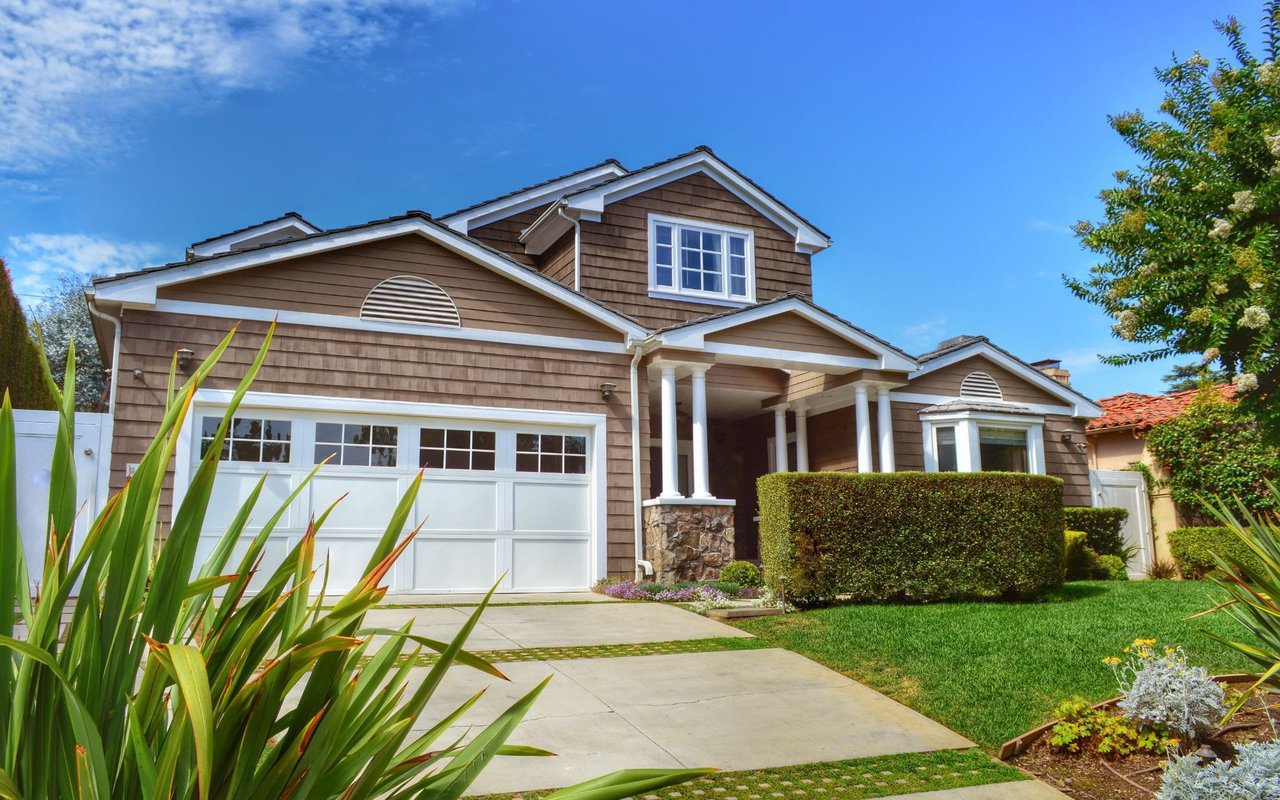
The Hayward Hills neighborhoods — including Fairview, Mission-Garin, and the areas surrounding Cal State East Bay — offer single-family homes on larger lots with panoramic views of the Bay and surrounding hills. These properties represent the premium tier of the Hayward market, with pricing reflecting the combination of view, privacy, and natural setting that the hillside corridors uniquely provide.
Washington Manor, Southgate, and the established neighborhoods along the bay plain offer traditional California ranch and post-war single-family homes on generous lots with mature landscaping and genuine neighborhood character. These communities attract families and move-up buyers who value space, established community fabric, and the price point advantage that Hayward maintains over comparable Fremont and Union City inventory.
The downtown core and neighborhoods surrounding the Hayward BART and South Hayward BART stations offer the most accessible entry points into Hayward homeownership, with condominiums sitting in the $440,000 to $470,000 range. These properties are particularly attractive to first-time buyers, university-affiliated residents, and investors serving the BART commuter rental demand.
Hayward has seen meaningful infill and transit-oriented development in recent years, particularly around its South Hayward BART corridor where the city's smart growth philosophy has guided compact, pedestrian-friendly development. These newer communities offer contemporary floor plans and energy-efficient systems at price points that reflect the surrounding neighborhood's trajectory.
Over the three months ending May 2026, Hayward home prices were up 2.6% compared to the same period last year, selling for a median price of $884K. On average, homes in Hayward sell after 17 days on the market, and hot homes can sell for about 7% above list price and go pending in around 9 days. Single-family homes average around $840,000, condos sit in the $440,000 to $470,000 range, and townhomes fall between $650,000 and $750,000.
Hayward's housing market is in an interesting spot heading into 2026. Prices have pulled back slightly from their pandemic-era peaks, inventory is expanding, and buyers are finding more negotiating room than they have had in years. For buyers who have been priced out of Fremont, Dublin, or the Tri-Valley, Hayward's combination of two BART stations, Bay Bridge and San Mateo Bridge connectivity, and meaningfully lower price points creates one of the East Bay's most compelling value propositions heading into the second half of 2026.
Hayward is located on the seismically active Hayward Fault, one of the most significant earthquake risks in the entire Bay Area. Buyers should understand the specific seismic risk designation of any property under consideration, review building vintage and any retrofit history, and factor potential retrofit obligations into their total cost of ownership analysis.
Hayward's dual BART stations — combined with the San Mateo Bridge connection to the Peninsula and I-880 access to Silicon Valley — give the city genuinely rare multi-directional commute flexibility. Buyers should map their specific commute to any property under consideration and evaluate which BART station and which highway corridors best serve their daily pattern before narrowing their neighborhood search.
Hayward's neighborhoods vary meaningfully in character, price, and daily lifestyle experience. Hillside communities offer privacy and views at premium prices. Flatland communities like Washington Manor and Southgate offer established character and generous lot sizes at more accessible prices. Transit-adjacent neighborhoods near BART stations offer the lowest entry points with the strongest rental demand. Understanding which combination of lifestyle factors matters most is the most important preparation step available before beginning a serious search.
Hayward Unified School District serves the city's public school population, with school quality and programming varying by campus. Moreau Catholic High School is a notable private option in the city. Cal State East Bay and Chabot College provide higher education access within the city limits — a meaningful practical advantage for families with college-bound students or adults seeking continuing education.
Hayward's dual BART access, San Mateo Bridge connectivity to the Peninsula, and centrally positioned East Bay location are the most powerful and most quantifiable selling advantages the city offers. Marketing that explicitly maps commute times to San Francisco, Oakland, Silicon Valley, and the Peninsula — rather than simply stating "convenient location" — will resonate with the data-driven Bay Area buyer who has been comparing Hayward to Fremont, Union City, and the Tri-Valley on a spreadsheet.
Prices vary significantly by property type and neighborhood in Hayward, and the gap between hillside view properties, established flatland neighborhoods, and transit-adjacent condominiums is wide. Sellers who price based on citywide medians consistently misposition their properties. Sub-neighborhood-specific comparable analysis — property type, age, condition, and specific location — is the only reliable foundation for a Hayward pricing strategy.
Hayward is one of the top 10 most diverse places in California, and that diversity is reflected in the city's restaurant scene, cultural events, community organizations, and civic life in ways that buyers from diverse backgrounds specifically value. Marketing that communicates the richness of the community — not just the property — will reach buyers who are choosing Hayward specifically for its character, not just its price point.
Hayward buyers in 2026 are savvy, well-researched, and comparison-shopping across multiple East Bay cities. Clean, well-staged interiors, updated systems, professional photography, and transparent disclosure of any seismic retrofit status or deferred maintenance history will consistently outperform unprepared listings — particularly as inventory has expanded and buyers have more options than at any point in recent years.
Hayward is known for being one of California's most diverse cities, its strategic East Bay positioning with two BART stations and San Mateo Bridge access, California State University East Bay and Chabot College, and its combination of Bay shoreline, hillside open space, and urban amenities that give the city a more complete lifestyle infrastructure than its price point would suggest.
Yes. Hayward offers a range of family-friendly neighborhoods, established parks including Don Castro Regional Recreation Area and Garin Regional Park, Hayward Unified School District campuses, and the kind of genuine multicultural community diversity that provides children with an enriching educational and social environment. The city's affordability relative to neighboring cities also allows families to purchase more home and more space than equivalent budgets provide elsewhere in the East Bay.
Hayward offers hillside single-family homes with Bay views in Fairview and Mission-Garin, established flatland single-family neighborhoods in Washington Manor and Southgate, transit-adjacent condominiums and townhomes near both BART stations, newer infill developments along the South Hayward BART corridor, and a range of older post-war housing stock throughout the city.
Hayward offers dual BART access with the Hayward Station in the downtown core and the South Hayward Station for the city's southern half — providing direct rail connections to San Francisco, Oakland, and the broader BART network. The San Mateo-Hayward Bridge provides direct Peninsula access, I-880 connects to Silicon Valley, and downtown San Francisco is reachable by BART in approximately 45 minutes from the Hayward Station.
Don Castro Regional Recreation Area features a swimming lagoon and hiking trails through oak-dotted hills. Garin Regional Park offers 3,000 acres of rolling hills and oak woodlands with miles of hiking paths and panoramic Bay views. The Eden Landing Ecological Reserve at the Hayward shoreline includes 600 acres of salt ponds being converted to tidal wetlands. The Japanese Garden in the city is the oldest designed along traditional lines in California. Cull Canyon Regional Recreation Area adds another swimming lagoon and hiking option within easy reach.
Yes. Hayward Regional Medical Center, the city's extensive network of regional parks, walkable downtown access, mild Bay Area climate, and meaningful cost-of-living advantage over neighboring cities make Hayward a practical and appealing retirement destination. The BART connections provide car-optional access to San Francisco's cultural institutions, medical specialists, and urban amenities for retirees who want Bay Area richness without Bay Area pricing.
159,201 people live in Hayward, where the median age is 38.2 and the average individual income is $44,613. Data provided by the U.S. Census Bureau.
Total Population
Median Age
Population Density Population Density This is the number of people per square mile in a neighborhood.
Average individual Income
Hayward has 49,470 households, with an average household size of 3.15. Data provided by the U.S. Census Bureau. Here’s what the people living in Hayward do for work — and how long it takes them to get there. Data provided by the U.S. Census Bureau. 159,201 people call Hayward home. The population density is 3,474.61 and the largest age group is Data provided by the U.S. Census Bureau.
Total Population
Population Density Population Density This is the number of people per square mile in a neighborhood.
Median Age
Men vs Women
Population by Age Group
0-9 Years
10-17 Years
18-24 Years
25-64 Years
65-74 Years
75+ Years
Education Level
Total Households
Average Household Size
Average individual Income
Households with Children
With Children:
Without Children:
Marital Status
Blue vs White Collar Workers
Blue Collar:
White Collar: